

AIZOME , The True Blue of Earth.
The blue created by indigo dyeing is clear yet deep, with a mystical charm that almost pulls you in. It resembles the endless sky or the vast sea, a color that evokes a sense of life and the Earth. The calming effect it has on our hearts may be connected to our very roots.
We are excited to bring back eit swim’s 2025 AIZOME (indigo-dyed) collection after several years.
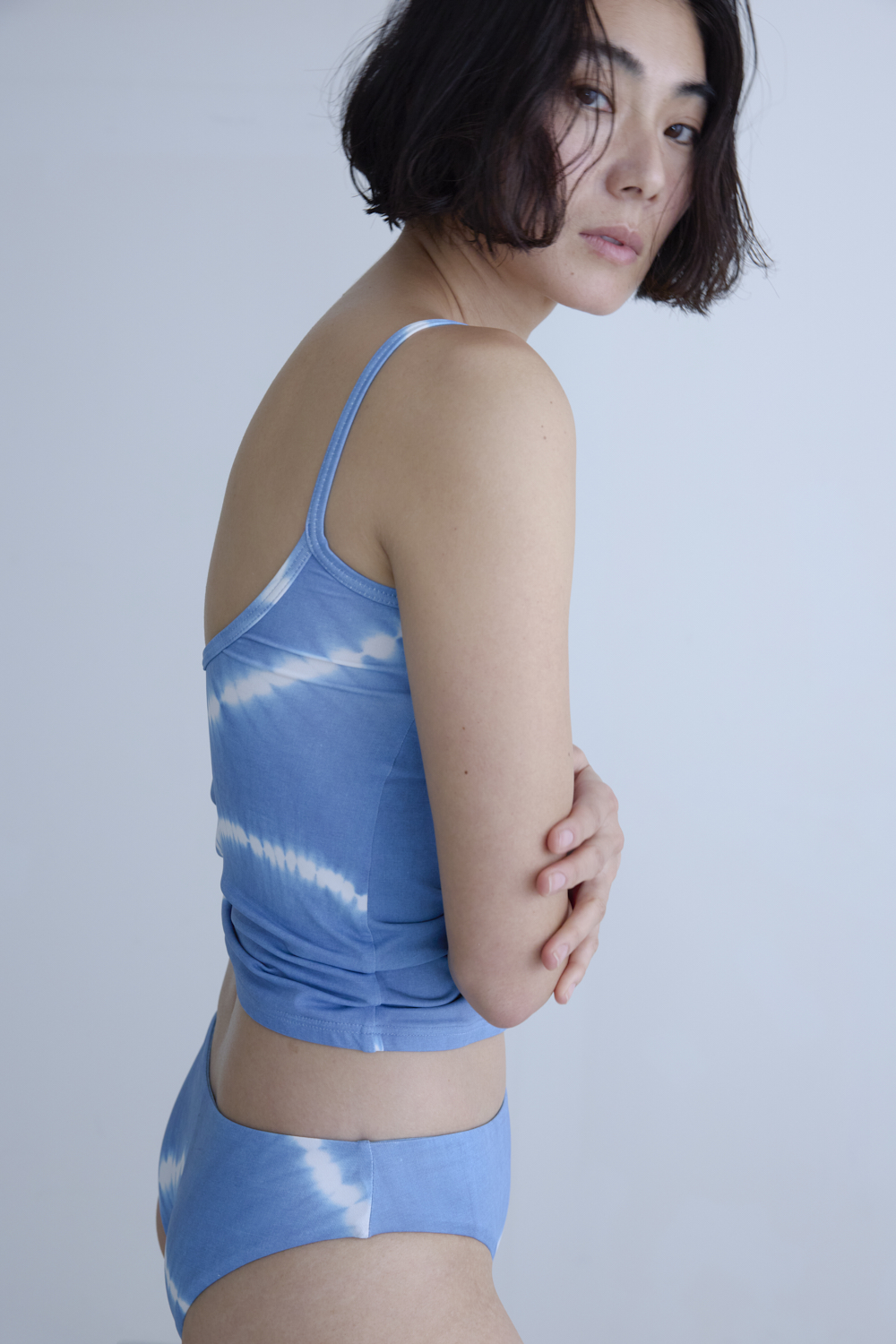
This time, we collaborated with Ayaki Shinada from NORABI, an indigo dye studio located near the Kujukuri area in Chiba, to create the patterns. NORABI uses the traditional Japanese technique of fermented indigo dyeing, one of the ultimate sustainable methods, to address social issues such as environmental challenges. The project places great importance on sustainability, minimal environmental impact, biodegradability, and the preservation of tradition.
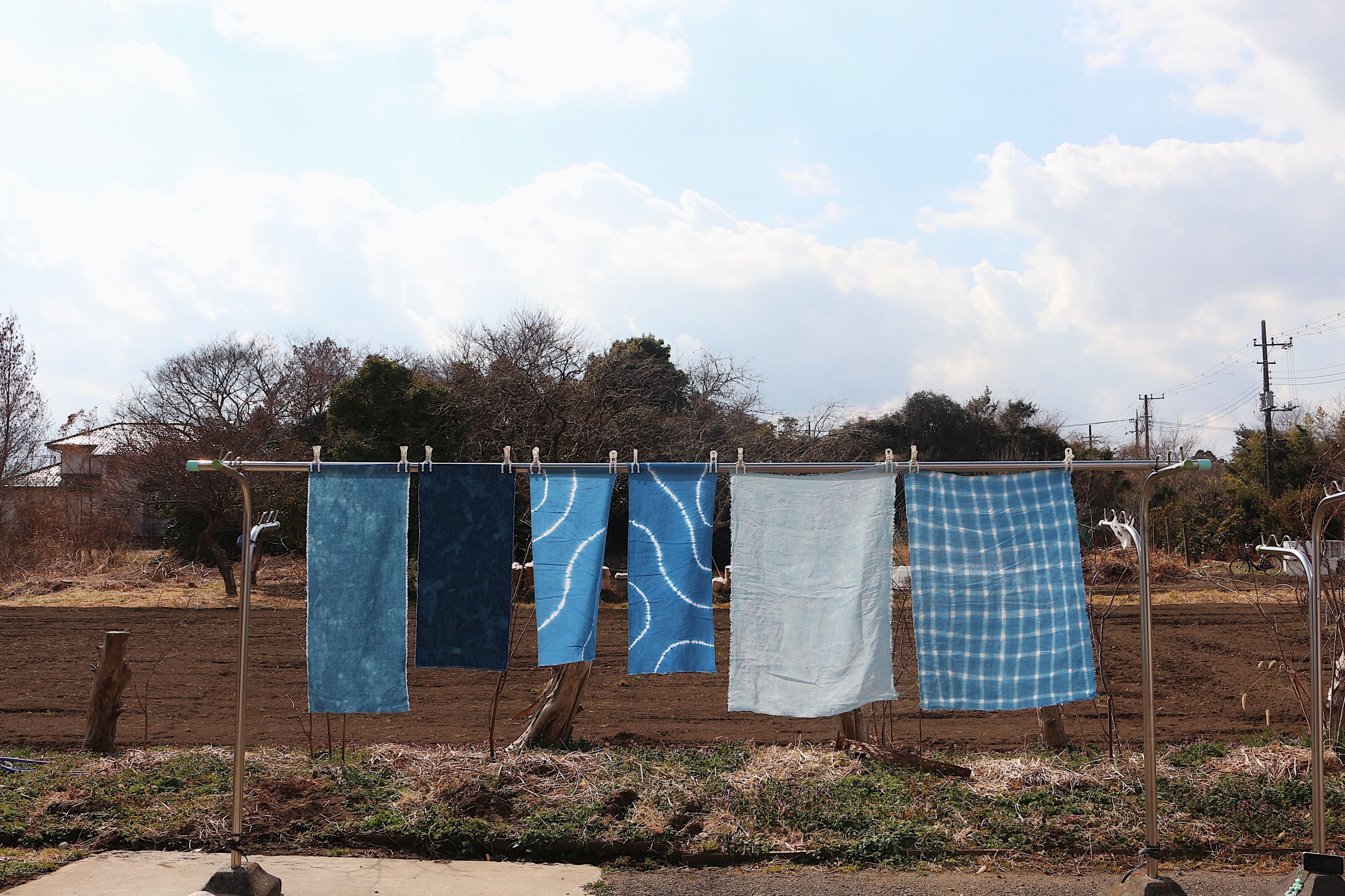

Indigo dyeing is one of the oldest dyeing techniques in the world. In Japan, it is believed that dyeing was practiced as early as the Nara period, and it became widely popular during the Edo period. The beauty of the color, its durability, and its resistance to fading, as well as its antibacterial, deodorizing, and insect-repellent properties, made it a highly practical dye, captivating the people of Edo. Indigo-dyed fabrics were used for commoners’ kimonos, noren curtains, workwear, and more, with the streets filled with the vibrant blue of indigo.
However, the production of indigo in Japan declined after the Meiji period, when cheap indigo from overseas flooded the market. During World War II, indigo cultivation was banned, and the tradition survived through various challenges.
What is commonly referred to as “indigo dyeing” (such as with denim) often uses chemically synthesized indigo dyes. In contrast, traditional “AIZOME” uses natural methods throughout the entire process. The indigo extracted from the leaves of the Japanese indigo plant (Polygonum tinctorium) is fermented using the power of microorganisms in a traditional technique.
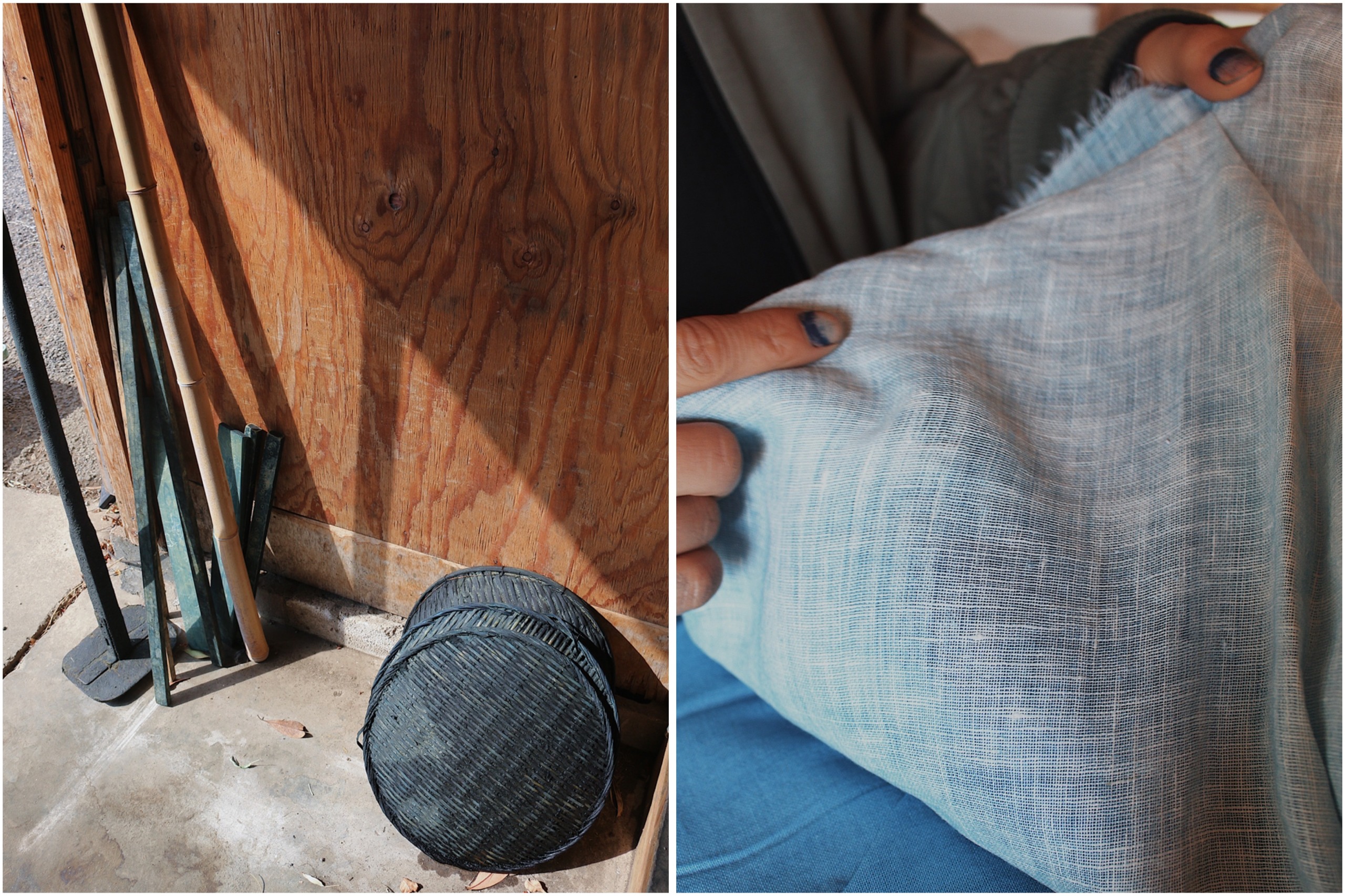
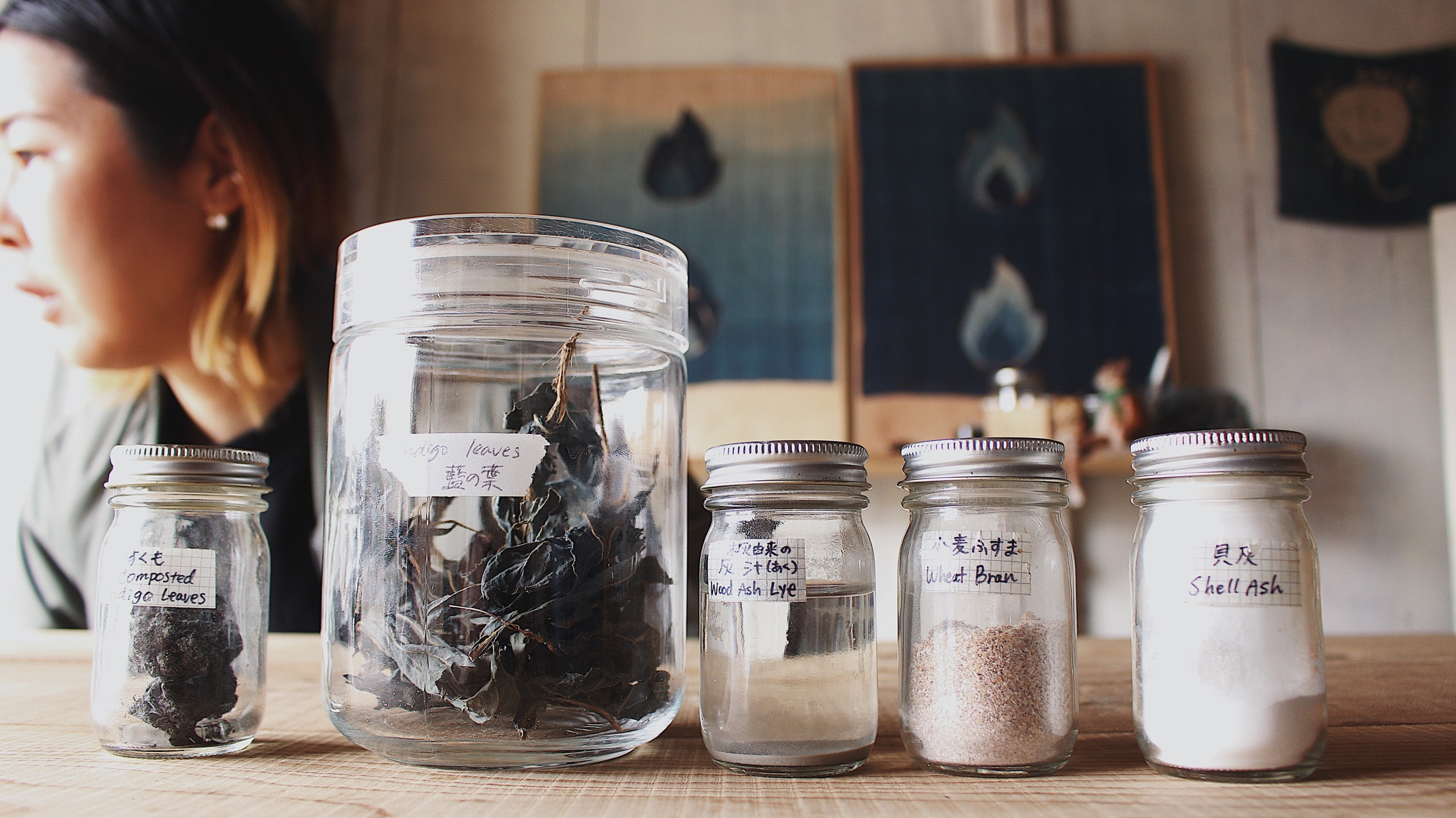
There are two main types of traditional Japanese indigo dyeing. One is “Shōaizome” (正藍染), where fermentation is solely driven by microorganisms and the dye is slowly cultivated. The other is “Hon’aizome” (本藍染), where natural materials are added to adjust the fermentation process for practicality. Both methods rely on the natural power of microorganisms throughout the entire process, and even the wastewater produced at the end is rich in nutrients and can be returned to the soil as fertilizer.
Shōaizome, the most traditional and time-consuming technique, uses only two ingredients—“sukumo” (fermented indigo leaves) and “ash lye” from wood ash—to make the dye. Interestingly, the character for “sukumo” is not of Chinese origin but is a “kokuji” (Japanese-made kanji), a testament to this ancient Japanese method.
The fermentation process, powered by microorganisms, takes anywhere from 10 days to a month, resulting in fabric dyed with indigo that is fixed naturally by sunlight and oxygen, without the use of chemicals. This is why the color rarely fades, and the fabric’s patina develops gently over time. The more you wear it, the more the dye integrates with your life, becoming part of your everyday experience.
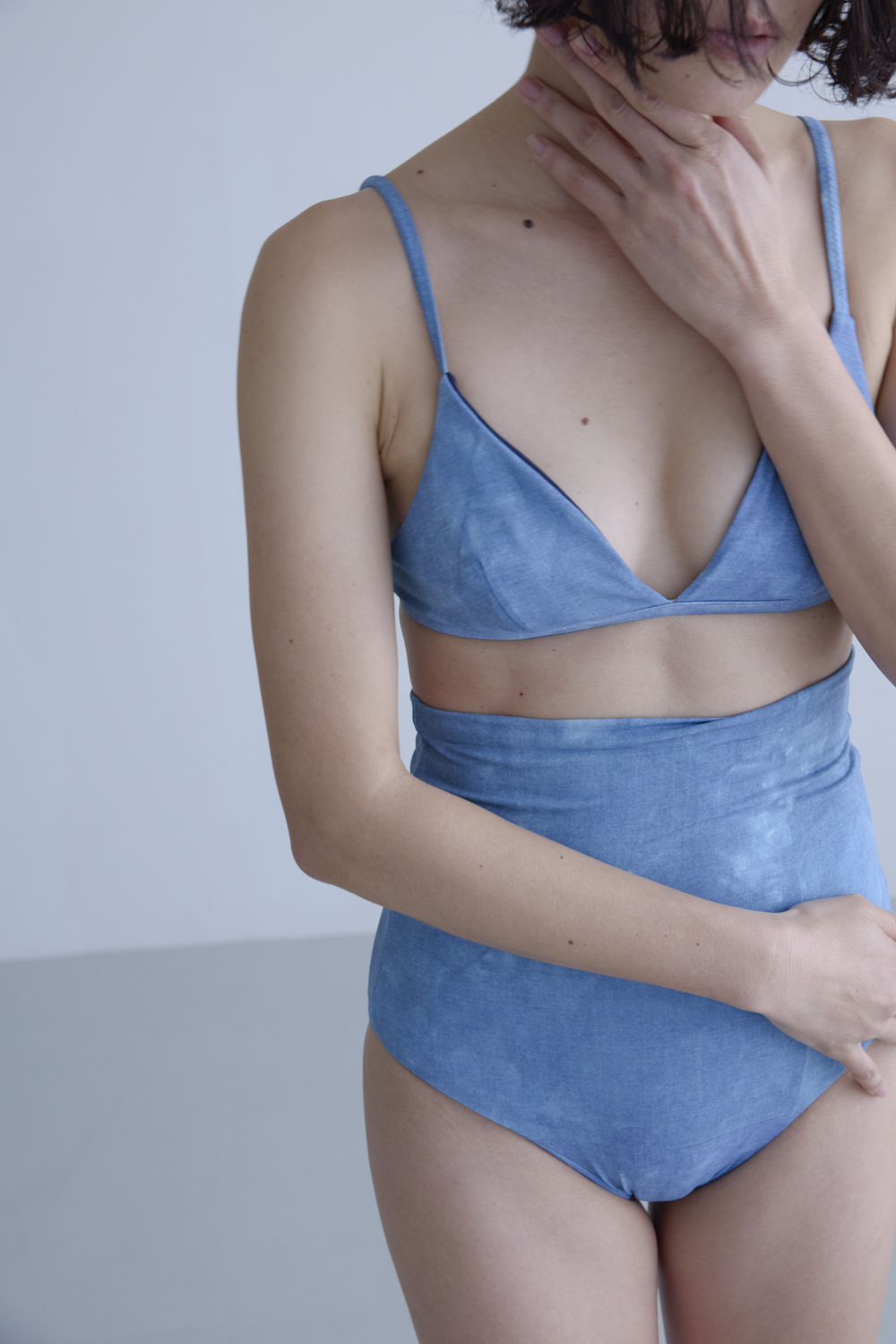
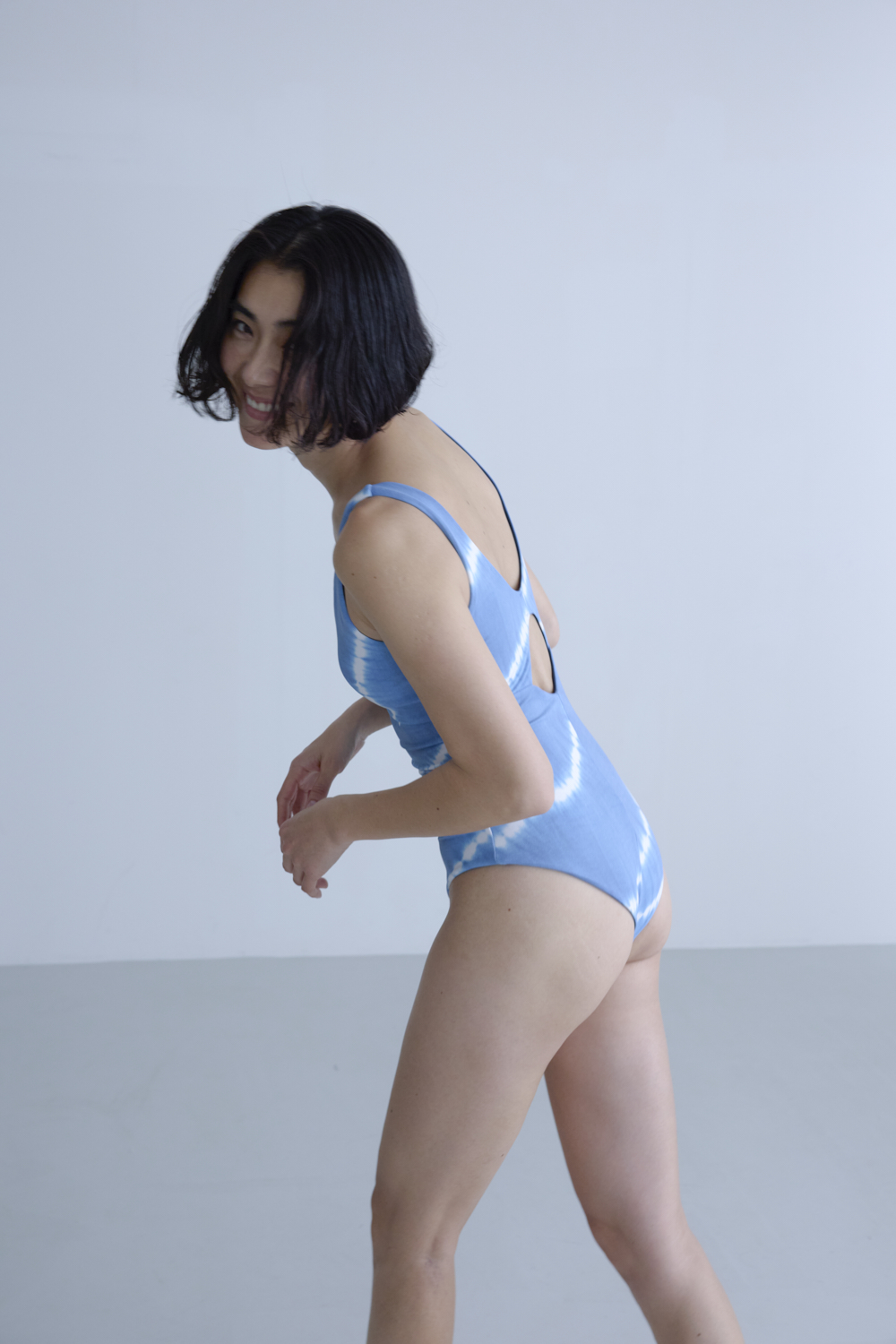
For our collection, eit swim has used the Shōaizome technique to dye two different patterns on eco-friendly fabric. One pattern evokes a sense of uncertainty and transience with its swirling marble-like colors, while the other features lines with a strong yet flexible, rope-like movement. Though printed, the pattern on each piece is unique, making each swimsuit a one-of-a-kind creation.
With craftsmanship full of passion, a tradition passed down through generations, and a forward-thinking approach, we invite you to experience the harmonious beauty of eit swim’s 2025 AIZOME collection.
Read our full interview with Ayaka from NORABI here.
*Swimwear, due to its functional nature, typically uses synthetic fibers. Unfortunately, AIZOME cannot be applied to synthetic fibers such as the recycled polyester and recycled nylon that we used. Therefore, with the important goal of “communicating” the essence of AIZOME, we have chosen to dye natural linen fabric and then print it onto the swimwear.
For reference:https://www.norabi.net/about#YvisxU