Arts and Crafts : A conversation with Yuichi Hirose
For the 2023 Collection, we focused on Edo-Komon and asked Yuichi Hirose, the fourth generation of the Hirose Dye-Works, which has a history of more than 100 years. We interviewed Mr. Hirose about ranging from the attraction of Edo-Komon to succession issues of traditional crafts and the balance between art and craft.
—What kind of work do you do nowadays, do you make products ordered by customers or wholesalers, or do you make them as your own creations?
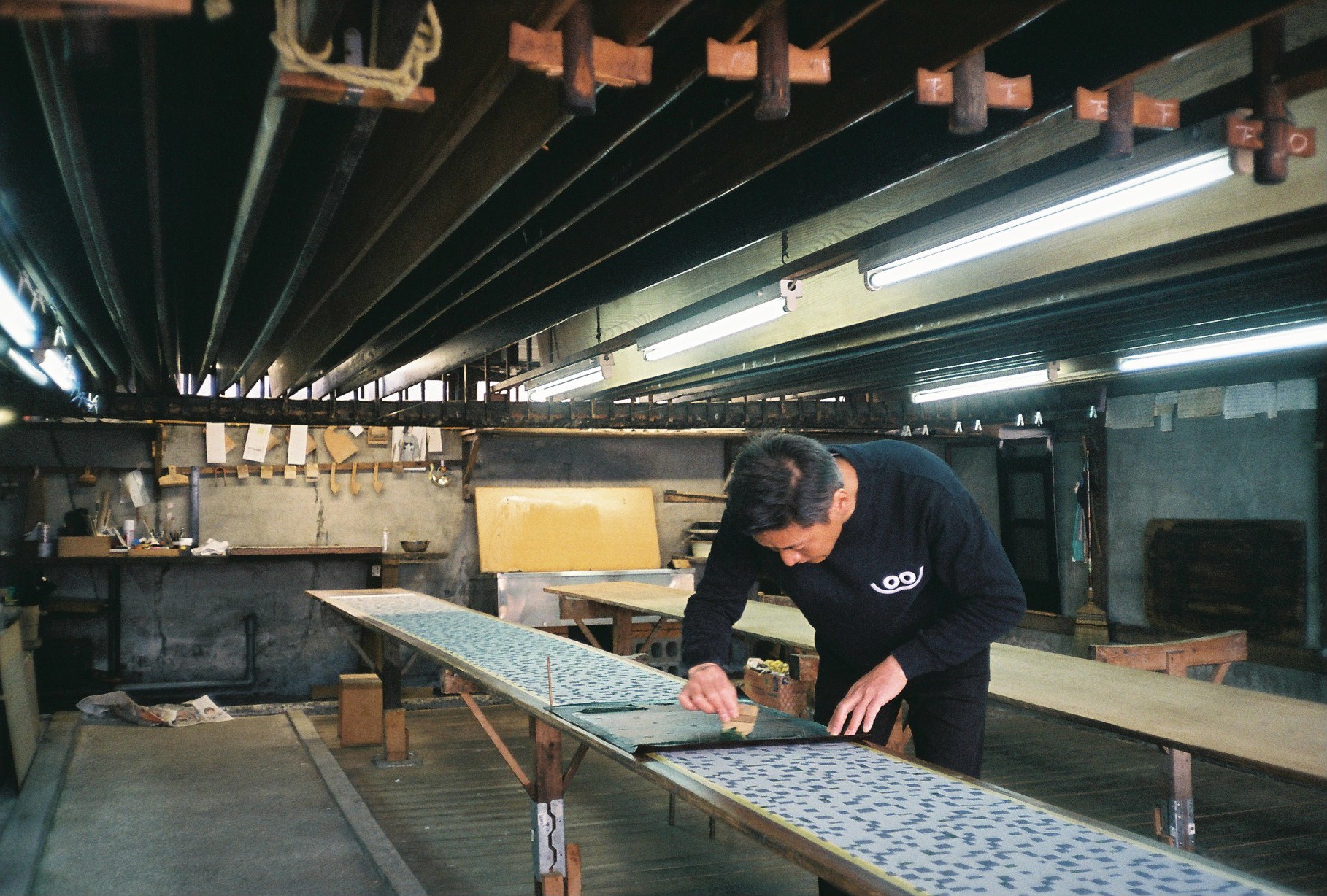
Hirose Dye-Works originally received orders from kimono wholesalers and worked as a subcontractor. But in my case, I mainly create as a creation. There are times when I work as a craftsman, but I still enjoy creating as an artist.
—How do you give your work individuality as an artist?
I use old patterns that have always existed, but by mixing new colors, I can make them look fresh. On the other hand, there are cases where I dare to use classic colors. There are also cases where a completely new design is created from a paper pattern.
—What do you think attract you to Edo-Komon?
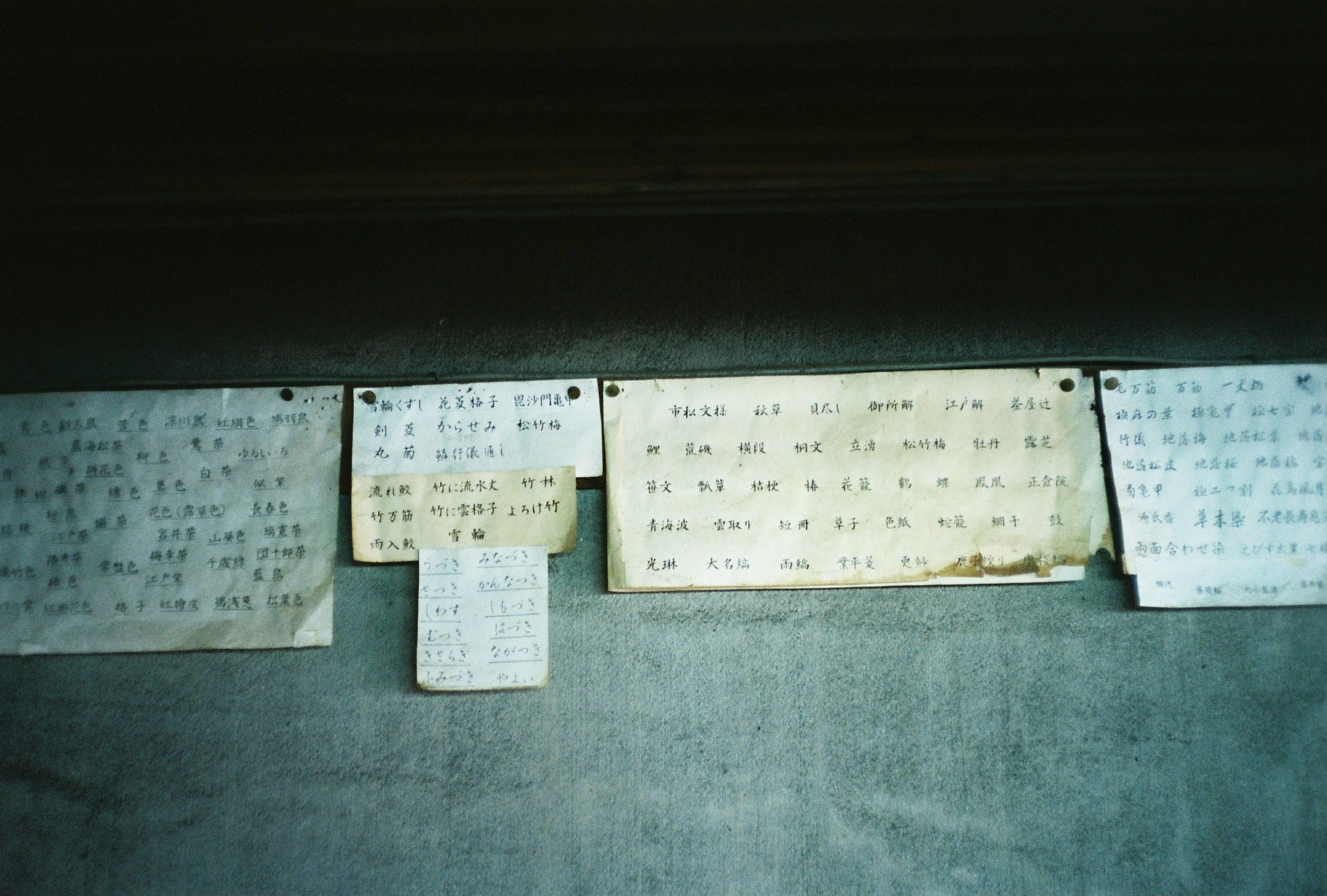
Edo-Komon is a dyed fabric that symbolizes the culture of Tokyo. It was born as a form of self-expression under the frugal and thrifty conditions of the Tokugawa period, and has a different quality from the “Miyabi(elegance)” of Kyoto. Rather than whether the design was cool or not, it was important that each pattern had its own meaning and story. I believe that the beauty of Japanese crafts lies in their uniquely simple nature.
But what made you think that Edo-Komon would be a good choice for this project?
—Even though there are many wonderful traditional crafts in Japan, the mere sound of the word “traditional craft” creates a barrier, like something “old” or something that is distant from our daily lives. We started the traditional series to show that traditional Japanese patterns and dyed goods can be incorporated into modern fashion and still be cool. Edo komon is truly a product of the beauty, fineness, and skill of the Japanese people. It is a great feeling when you get close and notice that they are tiny dots. I was attracted to this “iki” culture.
I am glad to hear you say so. The word “iki” is also a uniquely Japanese culture that neither English nor French can directly translate.
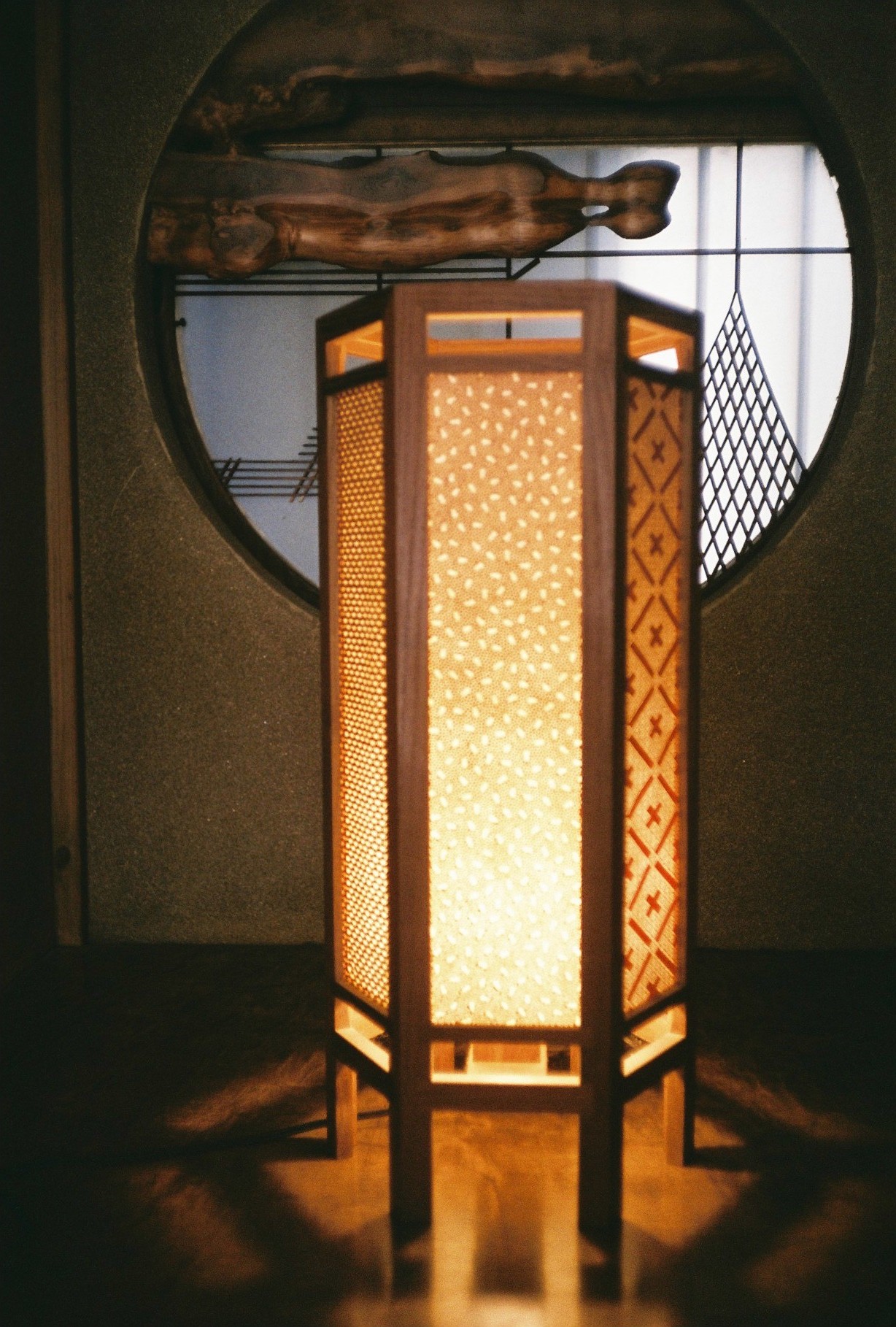
—This fact also makes me feel “iki”. I hear that Edo-Komon is also highly regarded overseas.
Edo -Komon went to France during the 19th century Japonism. It is said that William Morris of England was also influenced by it. When I hold exhibitions in Paris, people are surprised that such detailed patterns can only be found in Japan.
—About your delicate technique. You mentioned before that it was developed thanks to the existence of high-quality Japanese paper.
Yes, I believe that fine Japanese paper is the starting point of traditional Japanese crafts. I think it is the foundation of all crafts. The pattern for the Edo-Komon is also made of Japanese paper. This culture was born in Japan thanks to the availability of high-quality washi paper and blades that could cut it into small pieces. Our katagami(pattern paper) is made of Mino washi, which has the finest fibers of all washi.
—We were surprised that katagami, which has been handed down from generation to generation, is made of such thin Japanese paper.
That’s right (laughs). Of course it is finite, but it is possible because Japanese paper is strong to begin with.
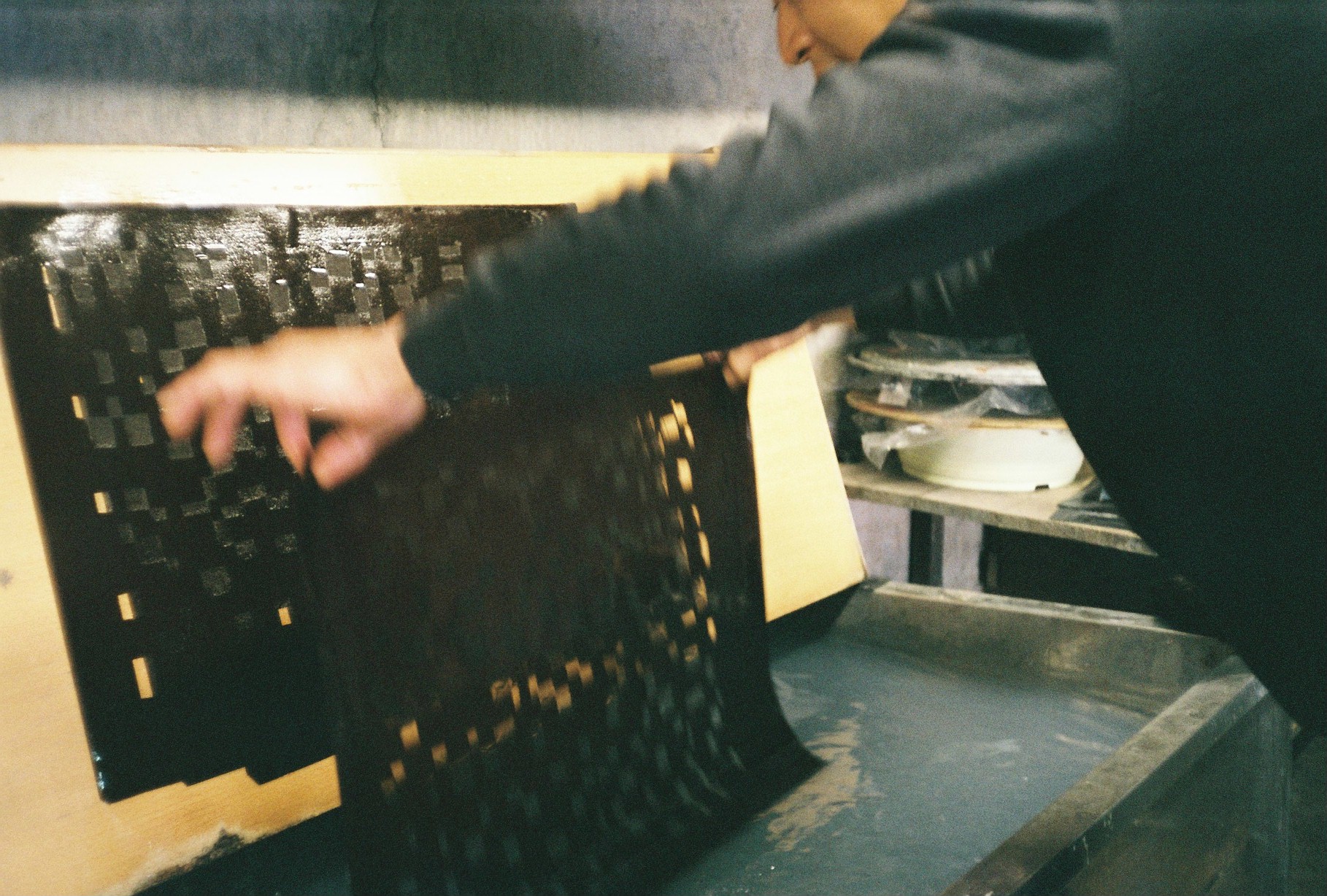
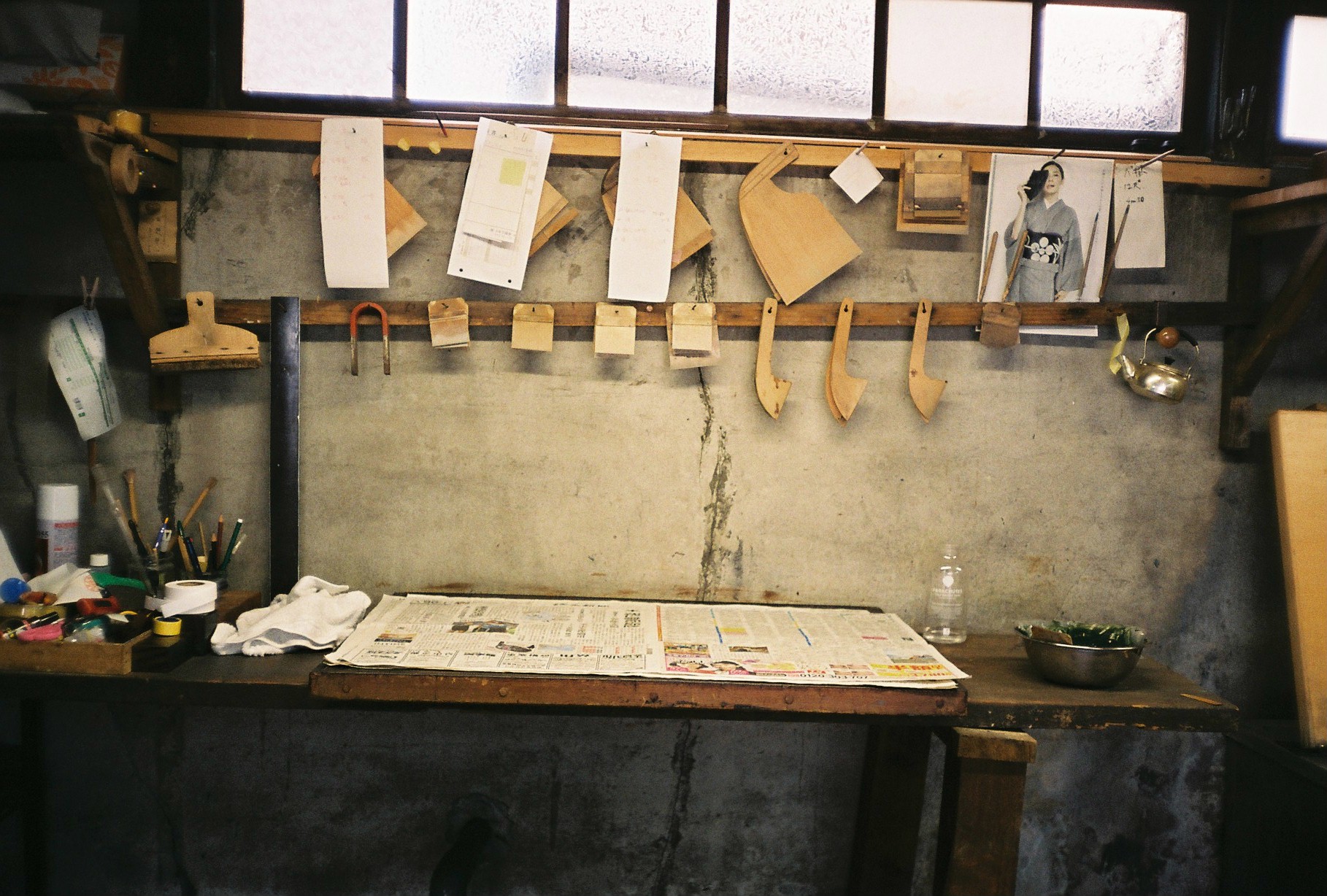
—I hear that the number of craftsmen who carry on such traditional crafts is decreasing.
The problem of Japanese traditional crafts, not limited to Edo-Komon, is the training of successors. I thought of this when I went to Paris for an exhibition, but traditional industries are beginning to decline not only in Japan but around the world. In a world of mass production and mass consumption, there is too much demand for efficiency.
Craftsmen’s lives are becoming harder and harder, and families who have been in the traditional crafts for generations don’t want to take over, can’t take over, or don’t want to let their families take over.
—Do you think there is any solutions?
I realized again that the reason I am enjoying myself now is because I am free to create things. In the end, I think I have no choice but to become the no.1 there and do my best. What remains will win in the end. Perhaps this is the part where we craftspeople have to break through on our own.
—How about promoting the artistry of traditional crafts more strongly?
When craftspeople are pursued, their technical skills are higher than their artistic skills. The higher the skill, the higher the value of the craft. Conversely, the higher the artistry, the lower the technique. It is difficult to balance the two.
—I see. I feel that if there are artisans like you who express traditional crafts creatively and challenge new things, the path to traditional crafts will become more attractive.
Basically, the most important thing is to protect and pass on the techniques. We want to cherish the ideas of our predecessors that have been preserved so far. At the same time I hope to convey the beauty of handmade products more widely through new designs, materials, and collaborations.